

%20(3).jpg)
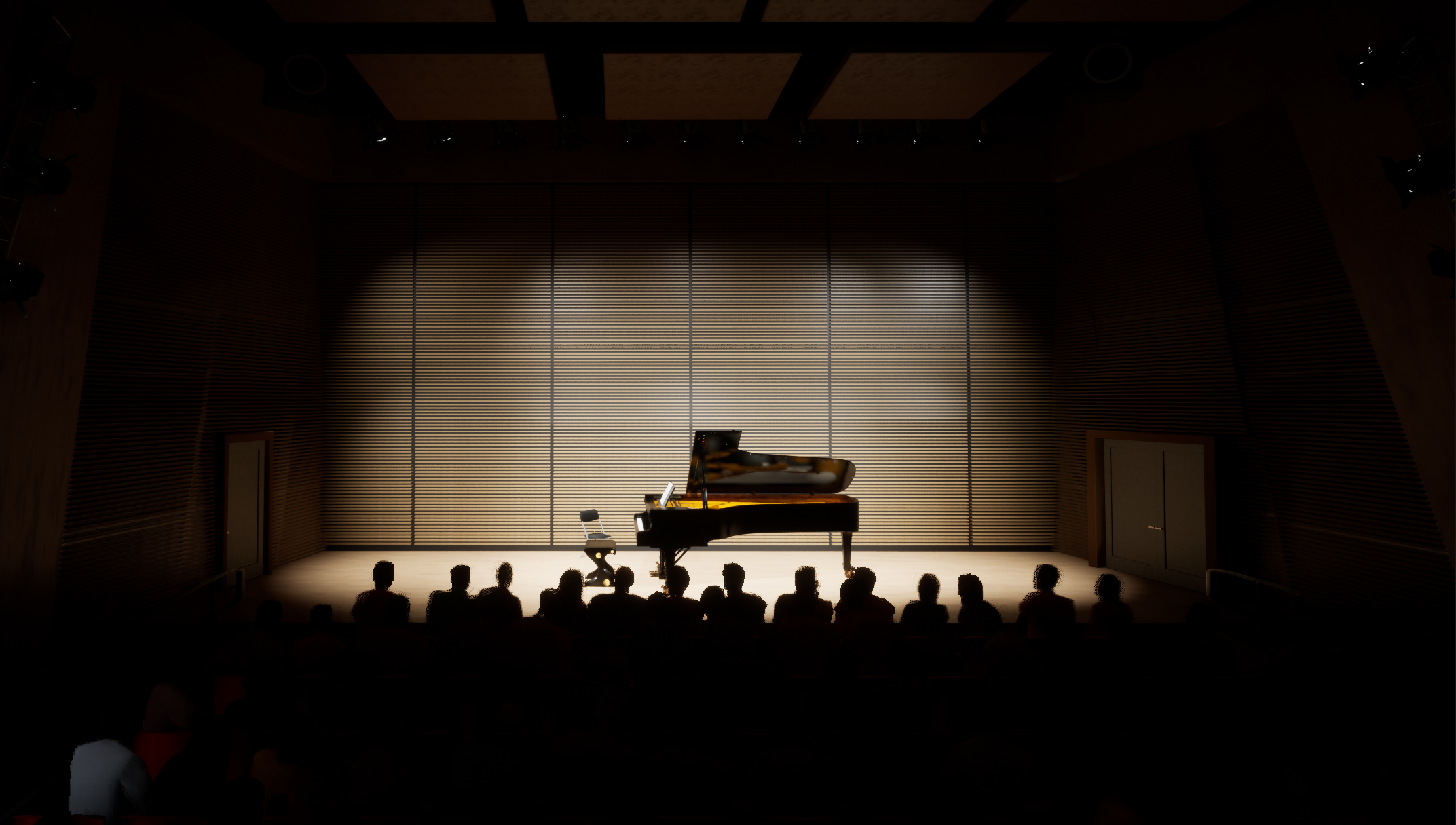
The idea of Room Tone VR came from my personal pain point of dealing with performance anxiety while studying for my Bachelors of Music in Piano Performance. The hour long recital of memorized music was a culmination of all the work students put in to graduate with a bachelors degree. The last recital was the single greatest pain point and caused a lot of anxiety for everyone (even faculty).. But part of receiving a performance degree was preparing yourself enough to survive the hour long performance.
The most helpful thing students could do to help with their performance anxiety was to.. perform for people (A LOT). Students would have the chance to perform repertoire for eachother every week. It was important to practice on the piano that would be performed on and even more important to practice at the venue where the performance would be held. The rehearsals were meant to incrementally build the confidence of the performer by controlling the variables of the performance that could be controlled.
Room Tone VR helps mimic the most helpful tool in overcoming performance anxiety by recreating the most anxiety inducing scenario, a recorded performance infront of a crowd.
.jpg)


John Cage once wrote about his experience in an anechoic chamber saying, "in that silent room, I heard two sounds, one high and one low. Afterward I asked the engineer in charge why, if the room was so silent, I had heard two sounds… He said, ‘The high one was your nervous system in operation. The low one was your blood in circulation.’" There's a symphony of small sounds playing around us, no matter how silent someone perceives the environment to be. This may be why someone's presence could be felt in a room wihtout seeing them, because the ear can hear someone's nervous system and cardiovascular system. The human ear's ability to hear mynute changes in the environment is why getting the right room tone is essential in a VR experience and also creating an anxiety fueled environment where a performer can practice performing.
Room tone is a sound recording technique used in television and film production to fill in the gaps of silence between edits. Every environment has a unique room tone because of the acoustics of the environment and even adding one person or a new object to the environment can change the room tone. In 2001: A Space Odyssey, Stanley Kubrick was the first director to leave out a room tone during the cut scenes in space because space is a vacuum and has no sound. The lack of sound in space creates an uncomfortably existential feeling that adds to the thrill of the classic movie.
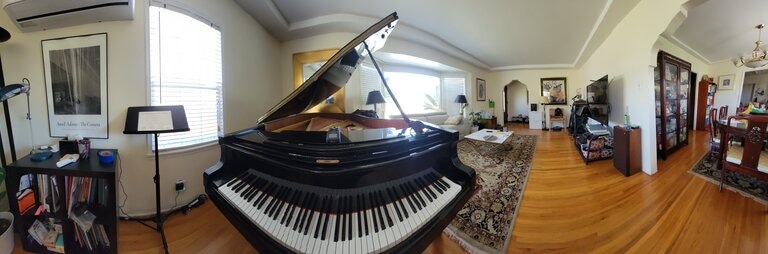
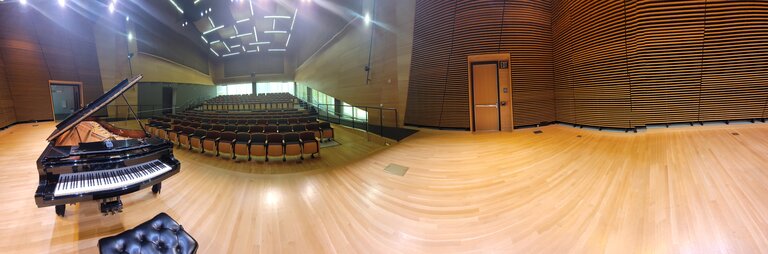
I went to collect different room tones at the places where I spent many hours practicing piano. Each environment had a unique room tone. I also recorded a C Scale on the piano over a metronome at 60bpm at each environment to show how each environment had it's own unique acoustics and instrument. The audio recordings were also paired with a panoramic photo and a very rudimentary 3d scan of the environment to give a better sense of the space. I would have liked an room tones of the different enviornments filled with people, but didn't have the resources for that. Afterwards, I built a high fidelity prototype of the concert hall at Pasadena City College in Unreal Engine to conduct usability studies and user interviews to see how the user felt when an audience was added while the user was on stage.
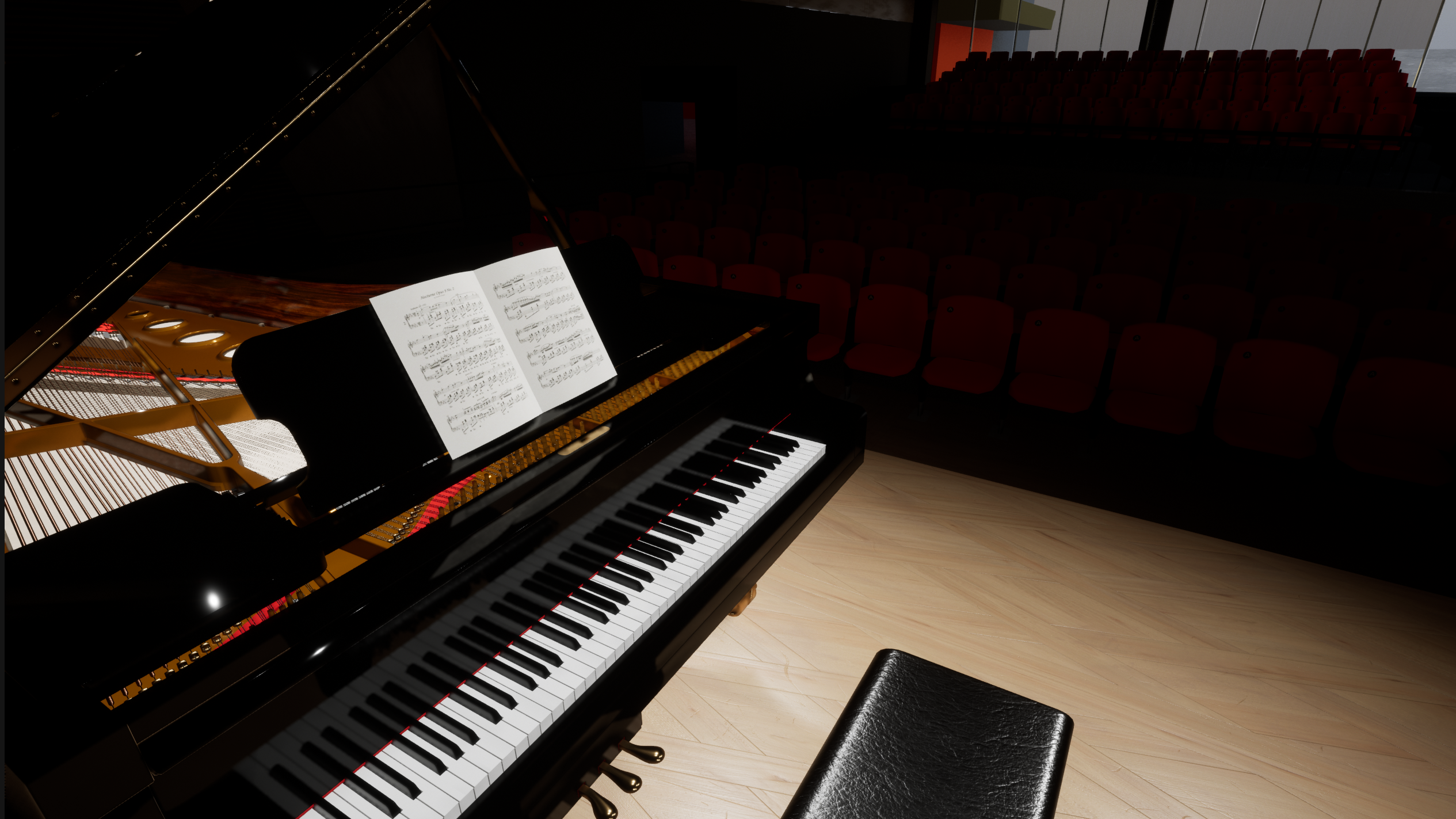
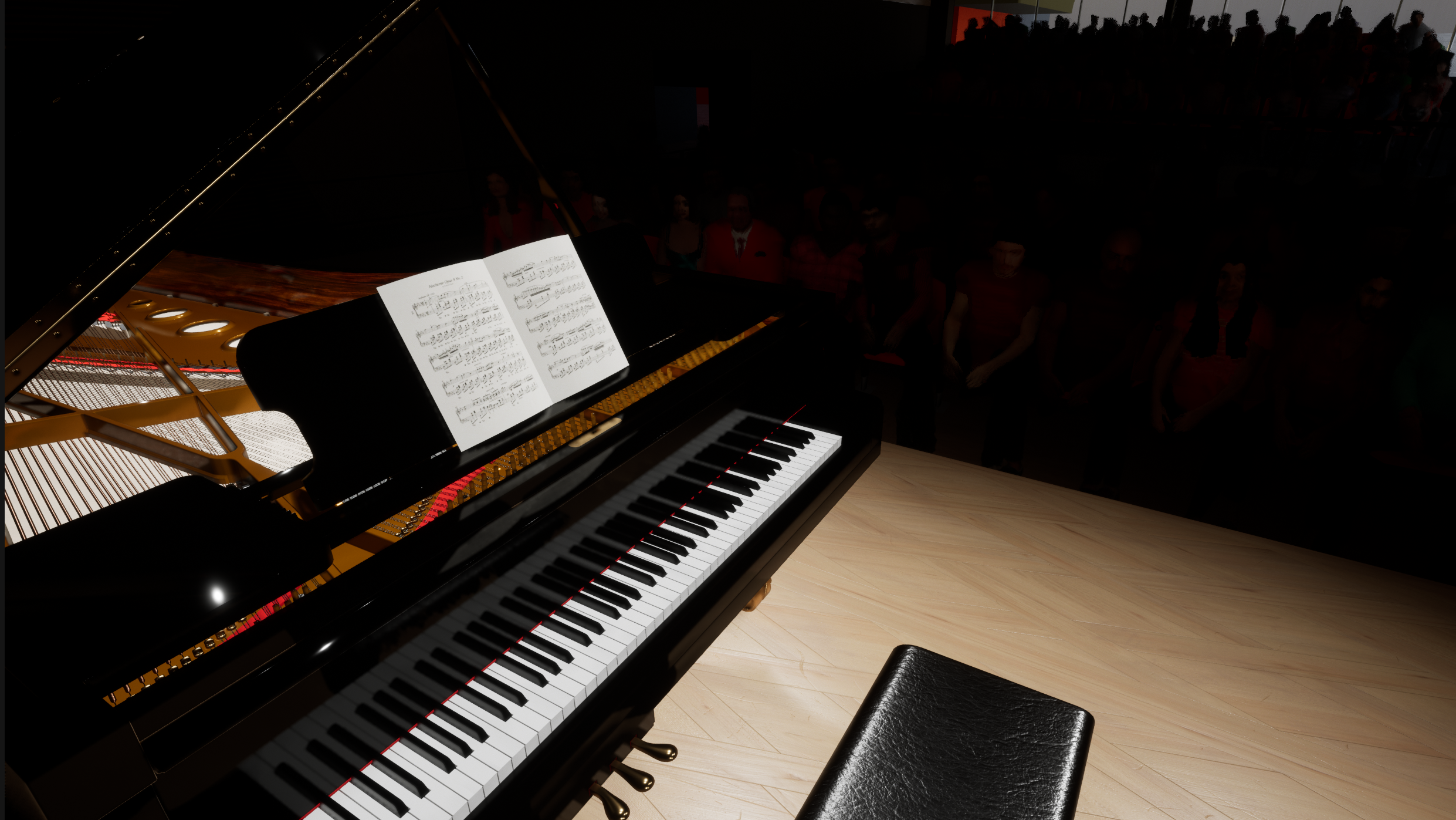
I concluded from the usability studies and user interviews that adding an audience does create an uneasy feeling in the users. The user interviews also concluded that there was a disconnect between the room tone of the empty concert hall and filled concert hall. A room tone of a packed concert hall needs to be recorded because the visual of a filled concert hall and the audio of an empty concert hall are not in sync. It would also be beneficial to allow users to choose between different piano brands and models because every company has it's own unique sound qualities and personality. There are even differences in sound quality within the same model of piano because of the density of wood that is used to build the piano.
Working on this project taught me that I don't have to be an expert in any specific program, as long as I'm curious and willing to learn and experiment. I had no prior experience with using Unreal Engine and making 3d scans, but I experimented and was able to create mockups and prototypes with tools that i've never used. I experimented with Revit, Sketchup, Lidar, etc. through the recommendation of friends in the architecture field, but landed on Unreal Engine by being open to experimenting with anything to get the job done.
I showed Room Tone VR to my mentors and friends who were all surprised by how quickly I went from asking questions, to producing something presentable. My mentors, who are professional performing musicians, think Room Tone VR is a great idea! They are also very pleased to hear about my pivot from music to ux design and love hearing about how i'm still creatively working on projects that push music forward.
Thanks for checking out my portfolio project!
-Kevin Chan