

-min.png)
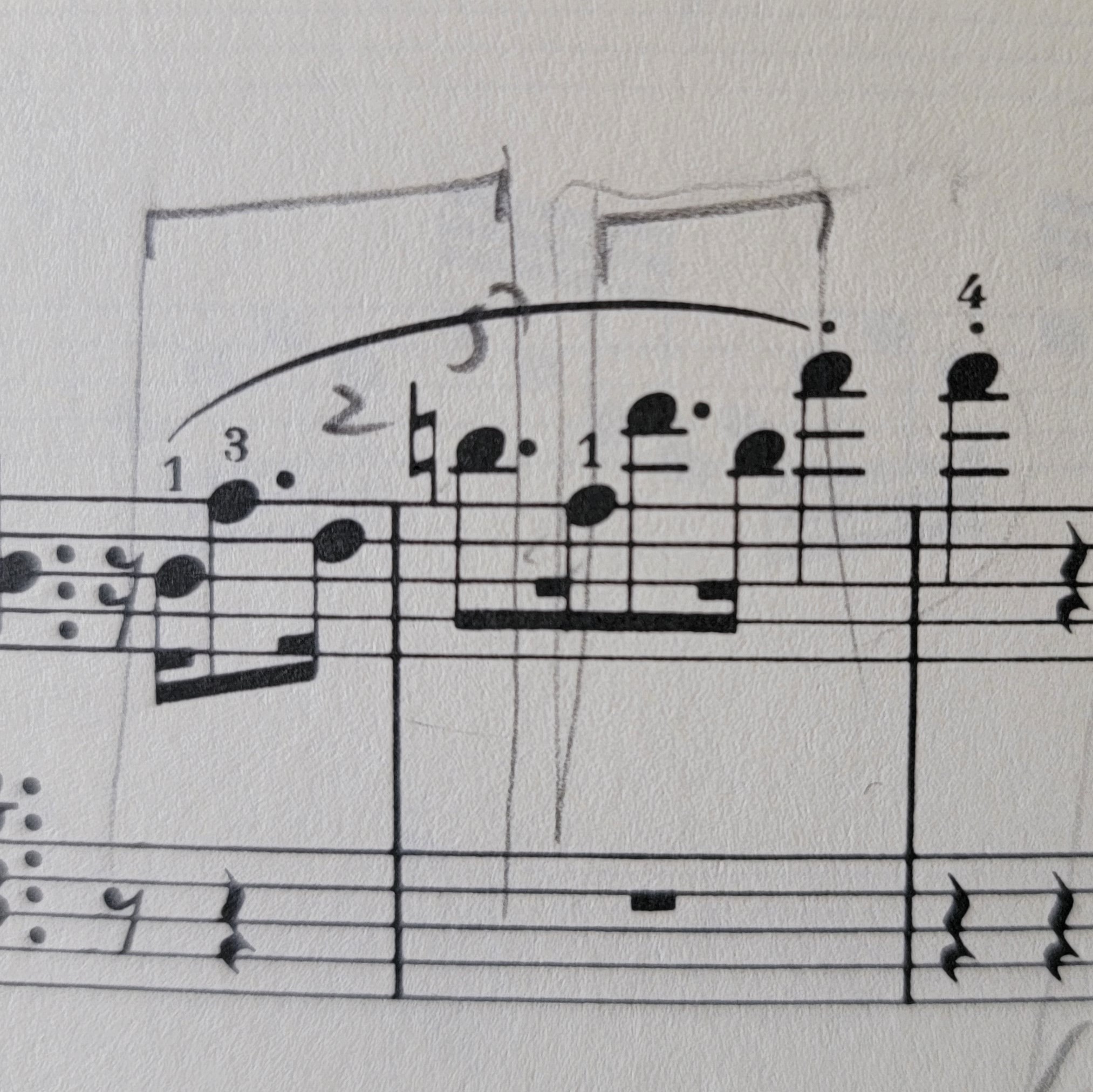

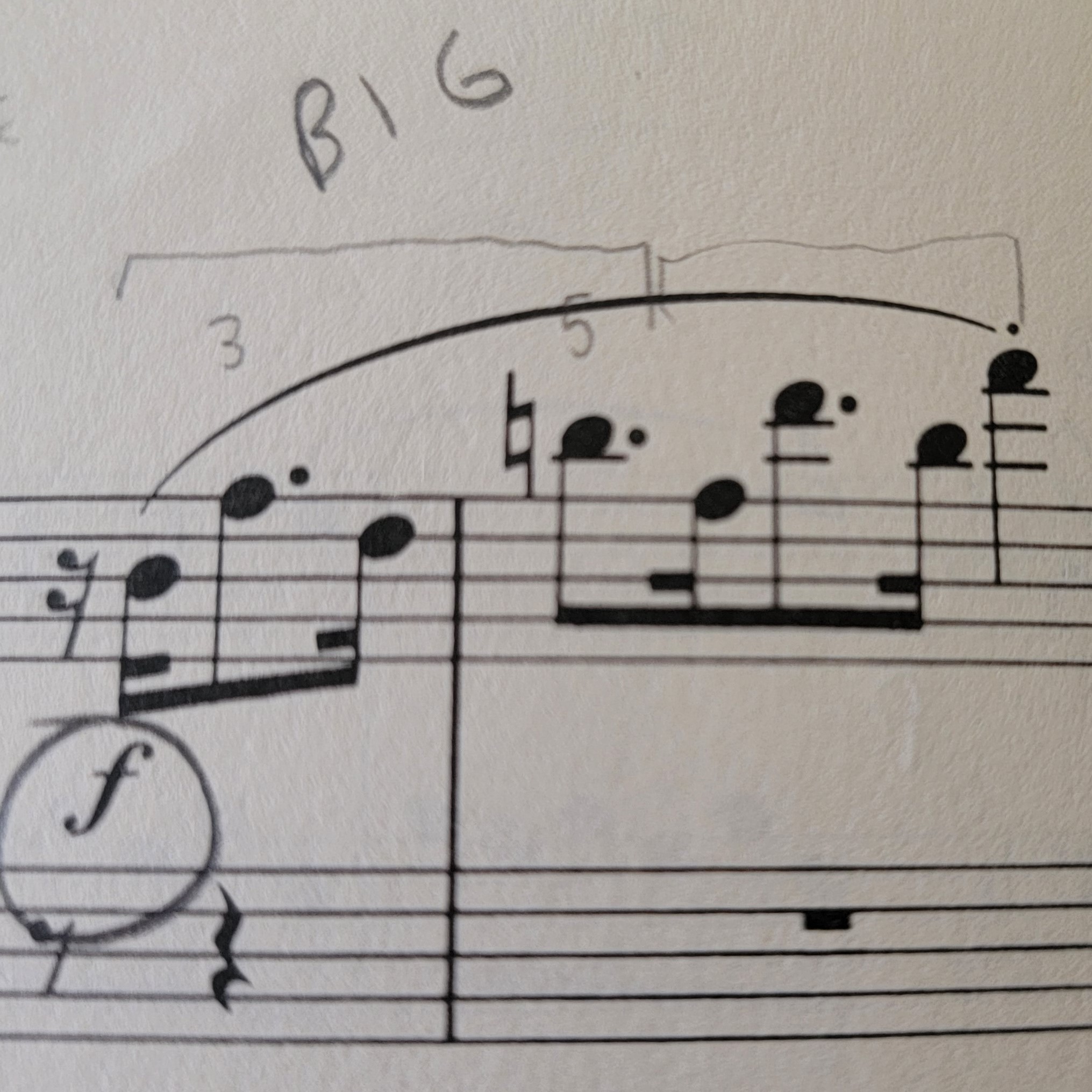
The idea of Position Study VR came from my piano professor/mentor at Pasadena City College. He always drilled the importance of knowing where your hands needed to go before moving. This skill is called proprioception. It's important to prepare the hand position before having to play the note because it gives the player more time to prepare for the perfect tone. My piano professor/mentor at Cal State University, Long Beach also emphasized the importance of hand positions by bracketing the 5-finger hand positions in the music. This allowed players to group notes together and play notes within the hand position. It's easier to learn pieces when notes are grouped together into hand positions because players are playing notes that are grounded in the 5-finger hand position vs playing note by note through the whole piece. This is why learning scales and chords are important because it makes learning pieces easier if players can easily identify what group it belongs to and playing within the group.
I was having lunch with my mentor from Pasadena City College and he was explaining to me one of the biggest pain points of teaching semester-to-semester vs teaching privately is the strict curriculum professors have to stick to. Music Professors have to teach all of the chords and hand positions in a semester. Private instructors can teach chords and hand positions at the student's pace and let the material absorb. Learning scales and chords can be the most tedious part of learning and teaching music. Position Study VR can make the most tedious part of learning music to the most amusing by gamifying it.
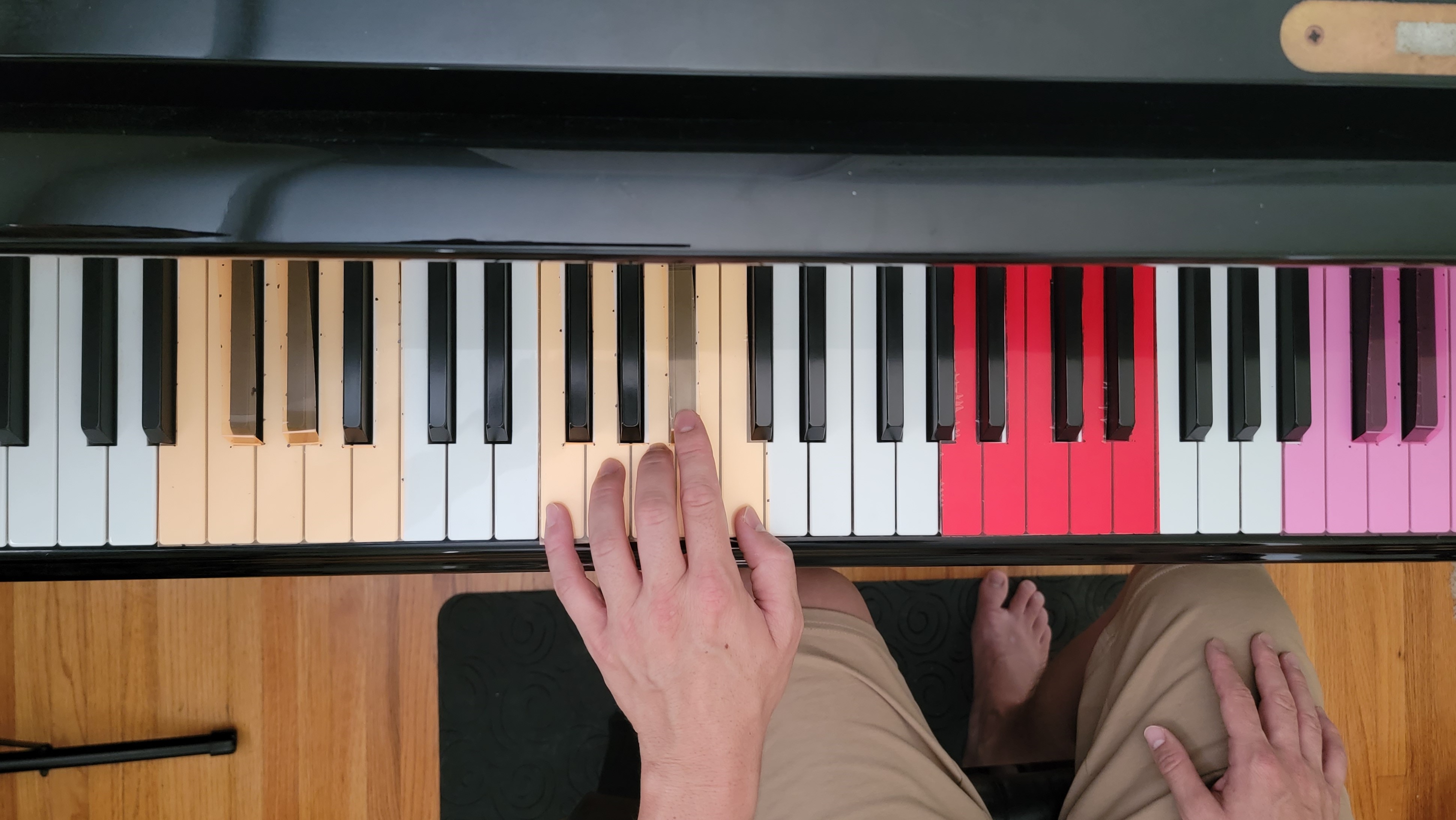
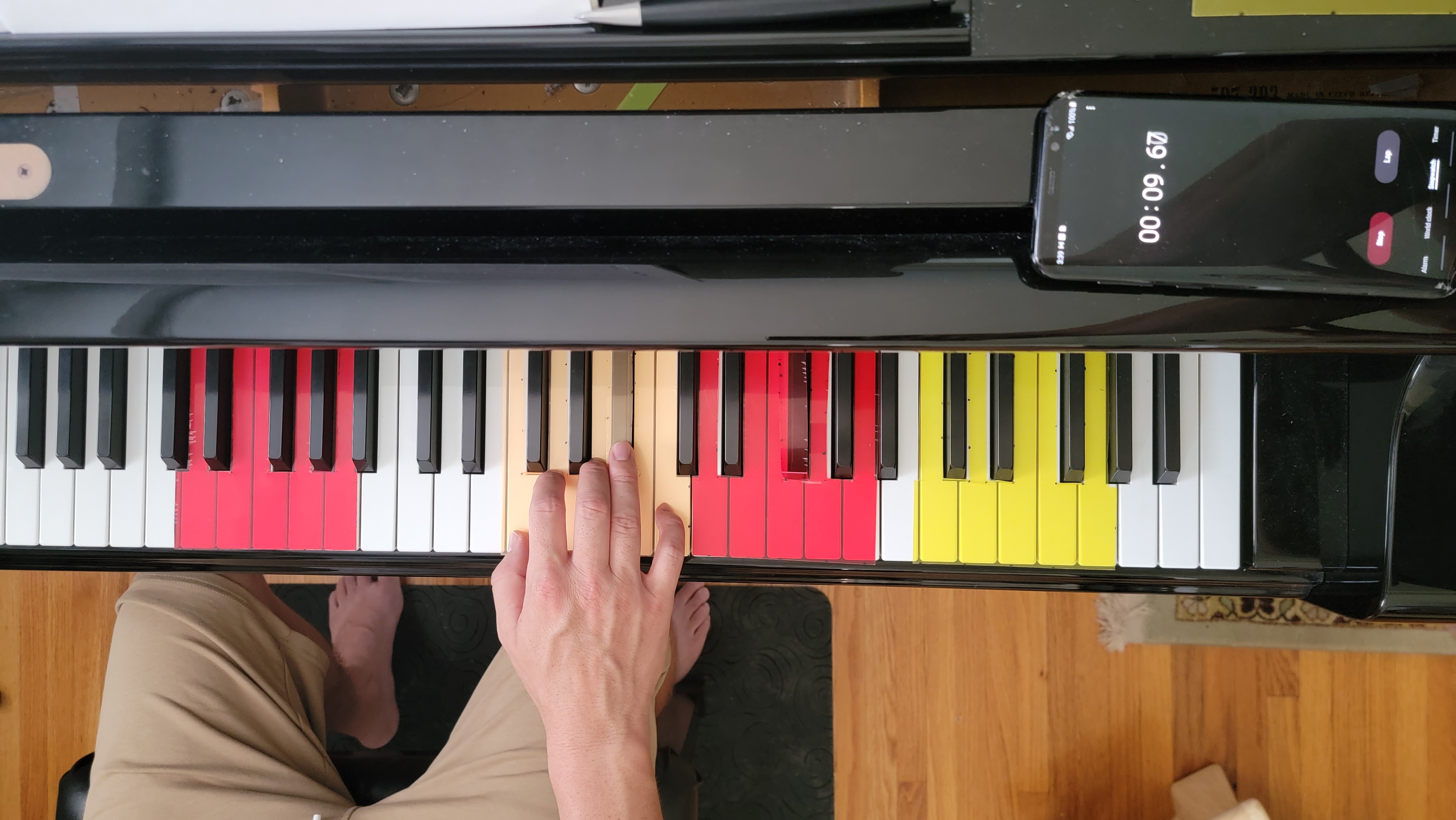
I designed a low fidelity prototype for Position Study VR by cutting out different hand positions on color laminated sheets to test with students. The usability study was to see how fast students moved between hand positions with and without the color laminated sheets. User Interviews were done after the usability study to rate the effectiveness of the hand positions being lit and if it would be helpful as a learning tool. The insights that I gained from the usability studies and interviews helped me create a high fidelity prototype in Unreal Engine.
.png)
I concluded from the usability studies and user interviews that users were able to identify chord positions and move between hand positions faster when hand positions were illuminated. Illuminating the keys on the piano gives users a visual guide to quickly move between hand positions. This leads to more practice repititions with the chords and will ultimately increase proprioception on the piano keys. Proprioception is knowing where to move your body and limbs through spatial awareness.
Working on Position Study VR taught me that it's important to stay creative and work on different hobbies when in a creative block. There was a period of time during the project where I wasn't able to work on the project because of scheduling issues. I used that time to work on building an environment for the project. I recently started learning how to use Unreal Engine, so it was the perfect time to passively work on the project and improve my design skills in Unreal Engine. I also able to work on my photography skills in Unreal Engine once the environment was built and captured my hero image for this project!
Thanks for checking out my portfolio project!
-Kevin Chan